Book Coach for Purpose-Driven Writers: Finding Your Mentor

What if the greatest barrier to finishing your book isn't a lack of discipline, but a lack of psychological safety? For those writing from a place of deep personal mission or lived experience, the creative process is often an act of profound vulnerability. You likely feel the weight of your story and the fear that a traditional approach might strip away its soul in favour of aggressive, market-led structures. Finding a book coach for purpose-driven writers means seeking a mentor who values your emotional well-being as much as your word count, ensuring that your message remains intact whilst you move through the complexities of the author journey.
It's common to struggle with the balance of a demanding life and a meaningful writing practice, especially when the subject matter feels heavy or transformative. You deserve a space where your voice is nurtured rather than pressured. This article will help you discover how to choose a mentor who aligns with your values and supports a sustainable, mindful approach to your craft. We'll explore the importance of trauma-informed guidance and professional editorial support that respects your emotional journey, ultimately leading to a completed manuscript that feels both authentic and impactful.
Key Takeaways
- Learn why mission-led manuscripts require a coaching style that rejects high-pressure hustle culture in favour of emotional depth and integrity.
- Understand the role of bibliotherapy and trauma-informed practices in establishing the psychological safety needed to share vulnerable or complex stories.
- Discover how to evaluate a potential book coach for purpose-driven writers by prioritising ethical alignment and shared values over standard commercial metrics.
- Master the steps to organise your vision and clarify your book's intended impact before you begin your search for a mentor.
- Explore the concept of restorative authorship to help you maintain a sustainable writing practice that balances your professional goals with your personal well-being.
Why Purpose-Driven Writing Requires a Unique Coaching Approach
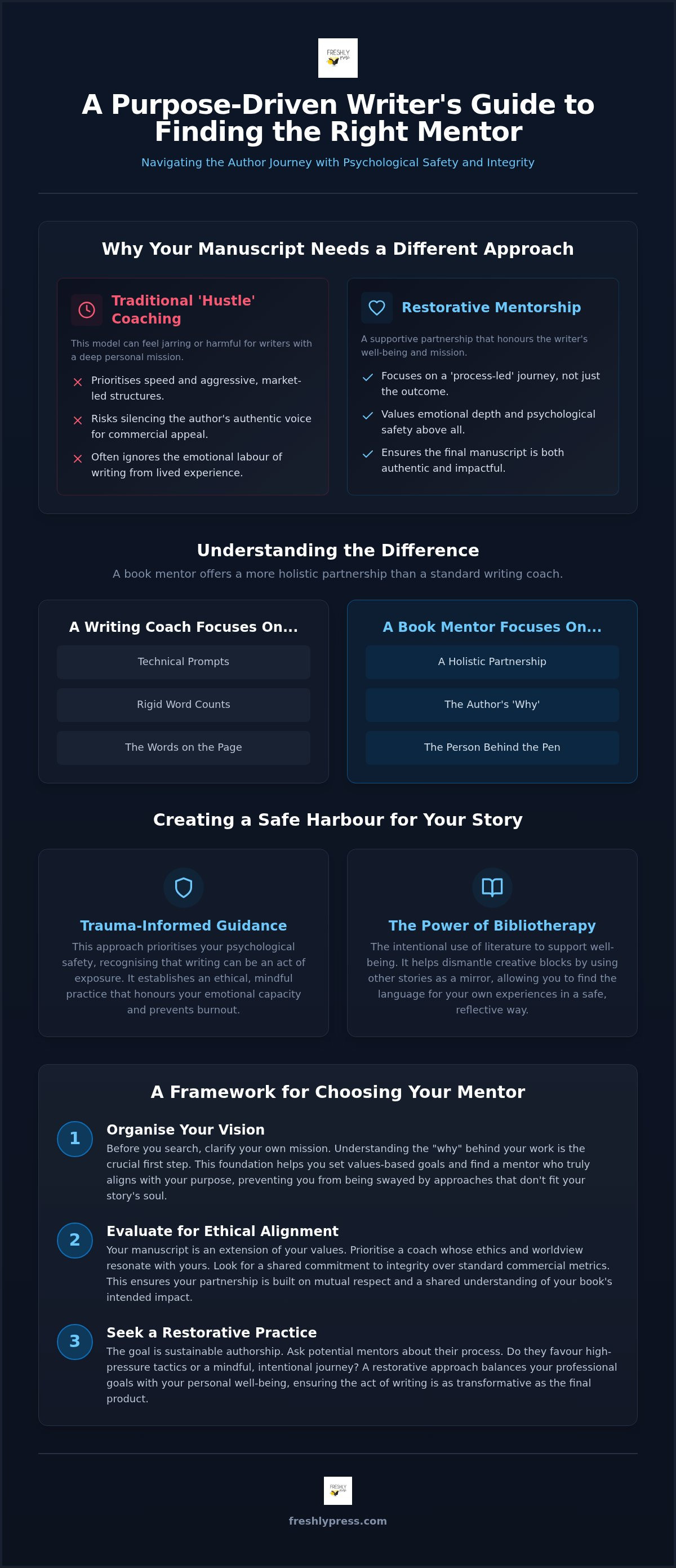
Purpose-driven writing isn't merely a creative endeavour; it's a commitment to a larger mission. Whether your work focuses on social change, personal healing, or sharing a hard-won truth, the stakes feel higher than a standard commercial project. Your manuscript is an extension of your values. Traditional coaching models often rely on high-pressure "hustle" tactics that prioritise speed over substance. For writers exploring sensitive or trauma-informed themes, this approach can feel jarring or even harmful. It risks silencing the very voice you're trying to find. A standard coach might push for a "dream book" written in weeks, but they often ignore the gravity and emotional labour required for a mission-led work.
A restorative approach shifts the focus from "outcome-first" to "process-led" mentorship. Instead of racing toward a finish line, you move with intentionality. This creates a space where the manuscript can develop at a pace that respects your emotional capacity. Working with a dedicated book coach for purpose-driven writers ensures that your internal alignment isn't sacrificed for the sake of a publication date. This type of mentorship acknowledges that the journey of writing is just as transformative as the final product.
The Difference Between a Writing Coach and a Book Mentor
While many writing coaches focus on technical prompts and rigid word counts, a book mentor offers a more holistic partnership. They don't just look at the page; they look at the person behind the pen. Purpose-driven authors often carry the weight of their message, which requires a mentor who understands the "why" behind the work. This relationship provides a safe harbour for the vulnerabilities that arise when you're writing for impact rather than just for profit. A mentor supports your vision whilst ensuring the process remains sustainable for your life and well-being.
Identifying Your Mission as a Writer
Before you begin, it's vital to articulate the core purpose of your book. Recognising your "call to write" as a form of contribution helps you set values-based goals. Understanding the writing process as a journey of discovery allows you to organise your vision early on. When you identify your mission, you can find a book coach for purpose-driven writers who shares your commitment to integrity. This clarity prevents you from being swayed by aggressive marketing structures that don't fit your story's soul. Setting these foundations ensures your manuscript has the lasting impact you intend.
The Role of Bibliotherapy and Trauma-Informed Coaching
Bibliotherapy is the intentional use of literature and narrative to support mental and emotional well-being. In the context of a book coach for purpose-driven writers, bibliotherapy serves as a bridge between the author's internal world and the external manuscript. It isn't just about reading; it's about using story as a mirror to understand one's own experiences. When you're writing about personal grief or trauma, grounded empathy from a mentor is essential. This steady, compassionate presence allows you to explore difficult themes without becoming overwhelmed by the weight of the past. It creates a container for your story to exist safely, ensuring the process remains restorative rather than re-traumatising.
How Bibliotherapy Supports the Creative Journey
Resistance in the creative process often stems from unexamined emotional blocks. Bibliotherapy helps you use reading and reflection to gently dismantle these barriers. By engaging with other texts, you can find the language for your own narrative, which helps in externalising your story through a mentor. This externalisation is vital. It allows you to maintain a healthy emotional distance whilst staying deeply connected to the heart of your message. Following a structured writing process that incorporates these reflective practices ensures that your work progress isn't stalled by emotional fatigue. This method transforms the act of writing from a solitary struggle into a shared journey of discovery.
Creating a Safe Harbour for Sensitive Ideas
A trauma-informed coach prioritises your psychological safety above all else. This means having an ethical awareness of the power dynamics in the coach-author relationship. It also involves recognising when the act of writing might trigger "exposure" anxiety or burnout. By encouraging a mindful writing practice that honours your energy, a mentor helps you navigate the vulnerability of sharing sensitive ideas. This approach ensures that the act of creation remains a source of healing rather than a cause of stress. A book coach for purpose-driven writers understands that your well-being is the foundation of your work. If you feel ready to explore this path, you might consider how bespoke book coaching can support your specific needs and help you build a practice that lasts.
Evaluating a Book Coach: A Framework for Purpose-Driven Writers
Choosing a mentor for your manuscript is a significant decision that shouldn't rest solely on price or prestige. For mission-led authors, the qualitative alignment of values is far more critical than a coach's success statistics or social media following. Finding a book coach for purpose-driven writers requires looking past the surface level of marketing promises to see if their philosophy matches your own. You should seek a partnership built on mutual respect and a shared commitment to the integrity of the final outcome. A true mentor prioritises ethical standards and the author's well-being over aggressive, high-pressure growth tactics that are common in more commercial settings.
Hustle-based writing programmes often rely on rigid, one-size-fits-all structures. These can be red flags for writers dealing with complex or sensitive themes, as they often prioritise speed over the necessary emotional depth. Instead, look for a communication style that feels steady and observant. A coach with quiet authority provides a safe harbour for reflection, which is essential when your work involves personal or societal transformation. This grounded approach ensures that your voice remains authentic whilst you navigate the structural requirements of a professional manuscript.
Core Qualities to Look For in a Mentor
A mentor should embody grounded empathy rather than high-energy salesmanship. This quality allows them to support your emotional state whilst providing the technical guidance needed for structural integrity. Experience in developmental editing is vital; they must understand how to shape a narrative without stripping away its soul. Sustainability is another key factor. A coach who understands the rhythms of a busy life will help you build a practice that avoids burnout. It's helpful to consider advice from 150 writers to see the breadth of needs authors have; often, the most valuable guidance isn't about market trends, but about protecting the creative spirit and maintaining a healthy perspective on the work.
The Importance of Bespoke Editorial Support
While group programmes can offer community, they often lack the depth required for sensitive or mission-led books. One-to-one coaching is superior for complex projects because it allows for a level of line editing and structural feedback that respects your creative autonomy. Your book coach for purpose-driven writers should be able to offer specific, nuanced critiques that help you refine your message without forcing it into a standard commercial mould. This personalised attention ensures that the editorial process feels like a supportive partnership rather than a series of rigid corrections. It allows your unique voice to flourish within a professional framework, resulting in a book that is both polished and deeply personal.
How to Organise Your Vision Before Starting Your Coaching Journey
Before you engage a book coach for purpose-driven writers, it's essential to move beyond the initial spark of an idea and into a place of structured clarity. While the internal drive to tell your story is a powerful motivator, it needs a thoughtful framework to become a transformative manuscript. You start by clarifying the "who" and the "why" of your work. Who is this book for, and why must it be written now? Preparing a summary of your core values and the specific impact you wish to make ensures that your chosen mentor can align with your deepest intentions from the very first session.
Reflecting on your current writing behaviour is equally important. Are you struggling with the technical structure, or are you feeling stuck due to the emotional weight of the subject matter? Identifying these friction points allows you to enter the coaching relationship with transparency. It's about creating a roadmap that respects both the professional requirements of the industry and the personal boundaries you need to maintain your well-being. This level of self-awareness prevents you from being pushed into structures that don't fit your narrative soul.
Refining Your Creative Intent
A good idea is often just a concept that interests you, but a purpose-driven book is a mission you feel compelled to share. To distinguish between the two, try to articulate the core message you want your reader to carry away after they close the final page. Writing a mission statement for your manuscript can be a restorative exercise. It acts as a compass, keeping you grounded when the creative process feels vast or daunting. For more support on this foundational stage, you can learn how to develop a book idea with intentionality through our dedicated guide.
Assessing Your Capacity for Growth
Deep developmental feedback is a gift, but it requires a level of emotional readiness. Honest reflection on whether you're prepared to share your story, and have it shaped by an external perspective, is a vital part of the preparation. This isn't about being perfect before you start; it's about being open. Setting realistic expectations for a sustainable writing practice ensures that you don't push yourself into burnout. A book coach for purpose-driven writers will help you navigate this growth, but your initial self-assessment provides the safety needed to begin. If you're ready to find that steady, ethical support, you can explore our author mentoring services to start your journey with intention.
Cultivating a Sustainable Practice with Freshly Press
Purpose-driven writing requires a foundation that isn't built on stress or unrealistic word counts. Tracy Stewart, the founder of Freshly Press, champions a philosophy of restorative authorship. This approach acknowledges that the creative journey is often as significant as the finished book itself. By choosing a book coach for purpose-driven writers who prioritises your well-being, you ensure that your message remains authentic whilst your energy is protected. Freshly Press integrates bibliotherapy with professional book coaching to create a space where psychological safety and technical excellence coexist. This isn't about high-volume output; it's about the steady, intentional development of a narrative that carries lasting weight.
The mentoring process focuses on developmental and line editing, ensuring that the structural integrity of your manuscript is sound. However, the guidance goes deeper than grammar or plot points. Tracy's quiet authority allows her to guide authors through complex, often sensitive narratives with a sense of stability. This steady partnership is particularly valuable for those writing about personal transformation or social change, where the emotional stakes are high. Each session is designed to move you forward with clarity, respecting the rhythm of your life and the importance of your mission.
One-to-One Mentoring for Lasting Impact
Generic courses often fail to address the specific vulnerabilities of a mission-led author. A tailored, one-to-one relationship provides the space needed to explore the psychological journey of writing. At Freshly Press, the focus remains on your unique voice and creative autonomy. This bespoke approach ensures that the editorial feedback respects your vision whilst pushing the work toward professional standards. You can view professional book coaching as a restorative path that honours both the writer and the written word. It's a commitment to doing things differently, prioritising human well-being over aggressive growth.
Your Next Steps Toward Authorship
Initiating a conversation about your purpose-driven project is a vital step toward making your vision a reality. When you seek a values-aligned coaching partnership, you can expect a mentor who listens deeply and advocates for your work's integrity. The first step is often a simple reflection on your mission and the impact you hope to achieve. If you feel ready to move forward with a book coach for purpose-driven writers who understands the depth of your commitment, we invite you to begin with intention. You can enquire about bespoke book coaching with Freshly Press to start a partnership rooted in empathy and professional expertise.
Embarking on Your Restorative Writing Journey
Writing a book that stems from a deep sense of purpose is a profound act of service. It requires more than just technical skill; it demands a partnership rooted in safety and mutual respect. By choosing a book coach for purpose-driven writers who prioritises your emotional well-being, you ensure that your message reaches the world without sacrificing your peace of mind. We've explored how a trauma-informed approach and the specialised integration of bibliotherapy can transform the creative process into one of healing and clarity. This intentional path allows you to produce work with lasting impact whilst maintaining a sustainable life.
If you're ready to move from a place of overwhelm to one of steady progress, Freshly Press is here to guide you. Our bespoke mentoring combines expert developmental and line editing with a restorative philosophy that honours your unique voice. You don't have to navigate the complexities of a mission-led manuscript alone. Book a discovery call to discuss your purpose-driven manuscript and take the first step toward a sustainable, impactful authorship. Your story has the power to create meaningful change, and it's time to share it with the world.
Frequently Asked Questions
What exactly is a book coach for purpose-driven writers?
A book coach for purpose-driven writers is a professional mentor who supports authors whose work is rooted in social change, personal healing, or a specific mission. Unlike standard coaches who focus on commercial success, this mentor prioritises internal alignment and your emotional well-being. They provide a balance of developmental editing and psychological safety, ensuring your manuscript remains authentic whilst meeting professional standards. This partnership helps you navigate the vulnerabilities of sharing a deeply personal or impactful story.
How does bibliotherapy help in the book writing process?
Bibliotherapy involves using literature and narrative reflection to support your mental and emotional health. In the writing process, it acts as a restorative tool to help you unblock creative resistance and navigate difficult themes. By engaging with other stories and reflecting on your own narrative, you can maintain a healthy emotional distance from your work. This practice ensures that the act of creation remains a source of growth rather than a cause of burnout or distress.
Is a book coach the same as a ghostwriter?
They are distinct services, though Freshly Press offers both to suit different needs. A book coach guides you through the process of writing your manuscript, providing structural feedback and emotional support as you do the work. A ghostwriter takes your ideas and research to draft the book on your behalf. Choosing between them depends on whether you wish to be the primary creator or if you prefer professional assistance in the drafting phase.
Can a book coach help me if I am writing about trauma?
Yes, provided the coach uses a trauma-informed approach. Writing about sensitive or traumatic experiences requires a high level of psychological safety and ethical awareness. A specialised book coach for purpose-driven writers creates a safe harbour for your ideas, helping you manage the vulnerability of the journey. They provide grounded empathy and technical guidance, ensuring you don't feel pressured into aggressive structures that might compromise your healing process or the integrity of your story.
How do I know if I am ready for professional book coaching?
You're likely ready when you have a clear vision or mission but find yourself struggling with the emotional weight or structural complexity of the manuscript. If the drive to tell your story is present, but you feel stuck or overwhelmed by the vulnerability of the process, a mentor can provide the necessary stability. Readiness is less about having a perfect draft and more about being open to deep developmental feedback and a sustainable, mindful creative practice.
What should I look for in a trauma-informed writing coach?
Look for a mentor who embodies quiet authority and grounded empathy rather than high-energy salesmanship. An ethical coach prioritises your well-being and creative autonomy over industry hustle metrics. They should have deep experience in developmental editing and a clear understanding of the psychological journey of authorship. It's vital that they respect your unique voice and offer a restorative space where you can explore sensitive themes without feeling rushed or exposed to unnecessary pressure.
Do I need to have a completed draft before hiring a coach?
You don't need a finished manuscript to begin. Engaging a coach during the early stages of the writing process helps you organise your vision and set values-based goals from the start. A mentor can assist with everything from refining your core message to providing line editing for a partial draft. Whether you're at the idea phase or halfway through a complex narrative, a coach provides the structural and emotional scaffolding needed to move forward securely.
How much time should I commit to a sustainable writing practice?
A sustainable practice is about consistency and quality rather than the number of hours spent at a desk. Your commitment should honour your existing life balance whilst allowing your ideas space to breathe. A mentor helps you set realistic expectations that avoid burnout. Some writers find that short, focused sessions are more effective than sporadic, high-pressure marathons. The goal is to cultivate a rhythm that feels restorative and allows for long-term, meaningful creative impact.
